- NSIB opens probe into Challenger 604 door separation incident
- Private jet forced into emergency landing in Abuja after door detaches
- NAMA spokesman, Musa honoured with prestigious 'Dan Kade of Kontagora' title
- The sky has no gender
- Surging revenues, strong balance sheet drive United Nigeria’s pioneer ₦100bn debt programme



Pilot doctored black box after botched Asaba landing, says NSIB

- Raises alarm over trend of pilots destroying flight data out of fear of sanctions
- Kicks against proposed slash of TSC allocation from 6% to 4%
The Nigerian Safety Investigation Bureau (NSIB) has revealed that the pilot of a Bombardier Challenger 601 private jet, operated by VMO Aero, intentionally overwrote the aircraft’s Flight Data Recorder (FDR) after a botched landing attempt at Asaba Airport, Delta State.
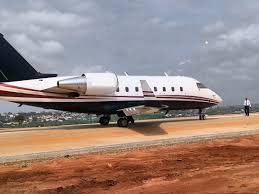

The incident, which occurred on July 10, 2026, saw the business jet miss the airport runway and land instead on a parallel concrete road in Ogwashi-Uku, a bizarre manoeuvre that sparked widespread suspicion regarding the crew’s intent and operational conduct.
Speaking during a virtual media briefing on Friday, the Director-General of the NSIB, Captain Alex Badeh Jr., disclosed that the pilot flew the aircraft back to Lagos without clearance from Air Traffic Control (ATC), deliberately running the system to wipe the flight’s critical performance logs.
Flight recorders operate on continuous circular memory loops, in which fresh data overwrites the oldest data once storage limits are reached. By operating an unauthorised leg back to Lagos, the crew exploited this design to erase crucial telemetry.
“It was discovered that the pilot who flew that aircraft overwrote the black boxes by the time he flew to Lagos. Everything that happened was overwritten. We are still investigating, but some of the data was destroyed,” Badeh stated.
The NSIB boss warned that the deliberate destruction and altering of flight data has become a troubling habit among pilots seeking to conceal errors from safety investigators.
He attributed this obstructive behaviour to a prevailing culture of fear within the industry
“The crew don’t trust NSIB; they are scared of losing their jobs. It is a major problem we are dealing with. We do not recommend punitive sanctions, and we constantly assure crew members that nobody should be penalised for telling the truth.”
Beyond operational hazards, Captain Badeh raised an alarm over a looming financial squeeze that threatens safety investigations across the country.
The Bureau is pushing back against a proposal presented at a House of Representatives public hearing by the Nigerian Airspace Management Agency (NAMA), which seeks to slash NSIB’s share of the 5% Ticket Sales Charge (TSC) from 6% to 4% to bolster NAMA’s own allocation.
Currently collected by the Nigerian Civil Aviation Authority (NCAA), the TSC is shared among key industry parastatals.
Under the existing framework, the Nigeria College of Aviation Technology (NCAT), Nigerian Safety Investigation Bureau (NSIB) 6% (currently the lowest allocation).
Badeh warned that cutting NSIB’s statutory revenue would cripple its expanding mandate, which now covers multimodal investigations spanning aviation, maritime, rail, and road transport.
“We already get the lowest percentage of all the agencies,” Badeh lamented. “With this proposed reduction, it’s going to severely affect the NSIB. The Bureau is already grappling with shortfalls in its current allocation; an additional cut is unsustainable.”
The funding issue comes as NSIB continues its transition from the Ministry of Aviation and Aerospace Development to the Presidency.
He said the move is substantially complete, with legislative amendments awaiting the Attorney-General’s review and subsequent consideration by the Federal Executive Council and the National Assembly.
The House previously approved the legislative framework for moving the Bureau to the Presidency.
He further disclosed that NSIB has not received its full six per cent allocation since around April or May. However, he said the shortfall has not stopped the Bureau from conducting investigations or expanding its multimodal capabilities.
“We are working on a more sustainable funded formula for the NSIB,” he said. “I’m not sure what that’s going to look like yet, but we are talking with the NRS and the Presidency to figure this out.” He said the objective is to develop a funding structure capable of supporting NSIB beyond its present financial difficulties.
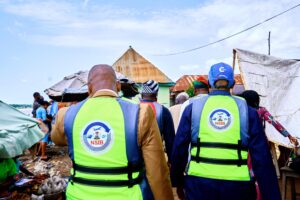
The Bureau is also pursuing funds expected from other transport agencies. Captain Badeh said NSIB has not received applicable funds from the Nigerian Railway Corporation, while NIMASA has disputed its obligation to remit certain charges. Meanwhile, he praised the Federal Airports Authority of Nigeria for its cooperation.
Google+
